Xuzhou GC Abrasives Co., Ltd.
Contact: eric.twintrade@gmail.com | +86-1377-0345-768 | www.gcabrasives.com.cn
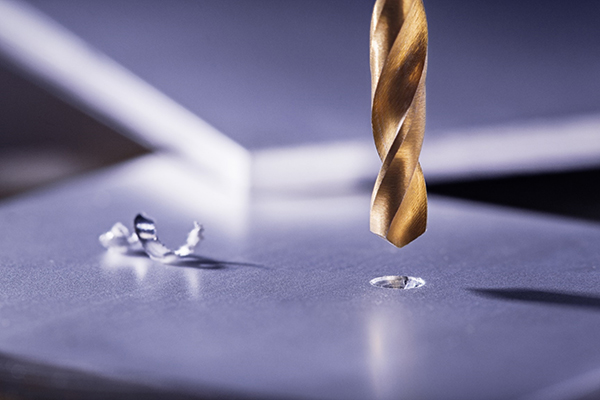
Drill bits are cutting tools used to remove material to create holes, almost always of circular cross-section. Drill bits come in many sizes and shapes and can create different kinds of holes in many different materials. To create holes, drill bits are usually attached to a drill, which powers them to cut through the workpiece, typically by rotation. The drill will grasp the upper end of the bit, called the shank, in the chuck.
Drill bits come in standard sizes, described in the drill bit sizes article. A comprehensive drill bit and tap size chart lists metric and imperial-sized drill bits alongside the required screw tap sizes. There are also specialized drill bits that can create holes with non-circular cross-sections.
Throughout this article, for clarity, the term drill bit or bit will always refer to a bit for use in a drilling machine, while drill will always mean a drilling machine. While the term drill can refer to both, this distinction will be maintained for consistency.
Characteristics
Drill bit geometry has several characteristics:
The spiral (or rate of twist) in the drill bit controls the rate of chip removal. A fast spiral (high twist rate or "compact flute") drill bit is used in high-feed-rate applications at low spindle speeds, where a large volume of chips must be removed. Low-spiral (low twist rate or "elongated flute") drill bits are used in cutting applications where high cutting speeds are typically employed and where the material has a tendency to gall on the bit or otherwise clog the hole, such as aluminum or copper.
The point angle is formed at the bit tip. It is determined by the material the bit will be used in. Harder materials require a larger point angle. Softer materials need a sharper angle. The correct point angle for the material influences wandering, chatter, hole shape, and wear rate.
The lip angle determines the amount of support provided to the cutting edge. A greater lip angle will cause the bit to cut more aggressively under the same amount of point pressure as a bit with a smaller lip angle. Both conditions can cause binding, wear, and eventual catastrophic failure of the tool. The proper amount of lip clearance is determined by the point angle. A very acute point angle presents more web surface area to the work at any one time, requiring an aggressive lip angle. With a flat bit, the small surface area supporting the cutting edges makes it extremely sensitive to small changes in lip angle.
The functional length of a bit determines how deep a hole can be drilled, the bit's stiffness, and the hole's accuracy. Longer bits drill deeper but are more flexible, so their holes may be inaccurate or wander from the intended axis. Standard twist drill bit lengths include Stub-length (short), Jobber-length (medium), and Taper-length (long).
Most drill bits for consumer use have straight shanks. For heavy-duty industrial drilling, tapered-shank bits are sometimes used. Other types of shank used include hex-shaped and various proprietary quick-release systems.
The diameter-to-length ratio of the drill bit is usually between 1:1 and 1:10. Much higher ratios exist, such as for aircraft-length twist bits and pressured-oil gun drill bits. However, higher ratios make it more difficult to produce good work.
The best geometry to use depends on the material being drilled. The following table lists geometries recommended for some commonly drilled materials.
| Tool geometry | Tool geometry | Tool geometry | Tool geometry |
| Workpiece material | Point angle | Helix angle | Lip relief angle |
| Aluminum | 90 to 135 | 32 to 48 | 12 to 26 |
| Brass | 90 to 118 | 0 to 20 | 12 to 26 |
| Cast iron | 90 to 118 | 24 to 32 | 7 to 20 |
| Mild steel | 118 to 135 | 24 to 32 | 7 to 24 |
| Stainless steel | 118 to 135 | 24 to 32 | 7 to 24 |
| Plastics | 60 to 90 | 0 to 20 | 12 to 26 |
Materials
Many different materials are used for or on drill bits, depending on the application. Hard materials, such as carbides, are much more brittle than steel. They are also more prone to breaking, especially when hand-held and not held at a constant angle to the workpiece.
Steels
Soft, low-carbon steel bits are inexpensive. They do not hold an edge well, so they require frequent sharpening. These bits are used only for drilling wood. Even using them with hardwoods rather than softwoods can noticeably shorten their lifespan.
Bits made from high-carbon steel are more durable than low-carbon steel bits. This is due to hardening and tempering. If overheated (e.g., by frictional heating while drilling), these bits lose their temper and the cutting edge softens. These bits can be used on wood or metal.
High-speed steel (HSS) is a form of tool steel; HSS bits are hard and much more heat-resistant than high-carbon steel. They can be used to drill metal, hardwood, and most other materials at higher cutting speeds than carbon-steel bits, and have largely replaced them.
Cobalt steel alloys are high-speed steels with higher cobalt content. They keep their hardness at much higher temperatures. They are used to drill stainless steel and other hard materials. The main disadvantage of cobalt steels is their greater brittleness compared to standard HSS.
Others
Tungsten carbide and other carbides are extremely hard and can drill virtually all materials. They hold an edge longer than other bits. The material is expensive and much more brittle than steel. Consequently, it is mainly used for drill-bit tips—small pieces of hard material fixed or brazed onto the tip of a bit made of a less hard metal. However, solid carbide bits are becoming common in job shops. In very small sizes, it is difficult to fit carbide tips. Some industries, most notably printed circuit board manufacturing, require many holes with diameters less than 1 mm, so solid carbide bits are used.
Polycrystalline diamond (PCD) ranks among the hardest tool materials and is extremely wear-resistant. It consists of a diamond particle layer, about 0.5 mm (0.020 in) thick, bonded as a sintered mass to a tungsten carbide support. Bits are made by brazing small segments to the tool tip to form cutting edges or by sintering PCD into a vein in the tungsten-carbide 'nib.' The nib can be brazed to a carbide shaft. It is then ground to complex geometries that would cause braze failure in smaller 'segments.' PCD bits are used in the automotive, aerospace, and other industries to drill abrasive aluminum alloys, carbon-fiber reinforced plastics, and other abrasive materials. They are used where changing or sharpening worn bits would be very costly. PCD is not used on ferrous metals because excess wear results from a reaction between the carbon in PCD and the iron in the metal.
Coatings
Black oxide is an inexpensive coating. It provides heat resistance, lubricity, and corrosion resistance. The coating increases the life of high-speed steel bits.
Titanium nitride (TiN) is a very hard ceramic material that can be used to coat a high-speed steel bit (usually a twist bit), extending the cutting life by three or more times. Even after sharpening, the coating's leading edge still provides improved cutting and a longer lifetime.
Titanium aluminum nitride (TiAlN) is a similar coating. It can extend tool life five or more times.
Titanium carbon nitride (TiCN) is another coating that is also superior to TiN.
Diamond powder is used as an abrasive, usually for cutting hard materials such as tile or stone. Friction generates large amounts of heat. Diamond-coated bits often need water cooling to prevent damage to the bit or workpiece.
Zirconium nitride has been used as a drill-bit coating for some tools under the Craftsman brand name.
Al-Chrome Silicon Nitride (AlCrSi/Ti)N is a multilayer coating made of alternating nanolayers, developed using the chemical vapor deposition technique, and is used in drilling carbon fiber reinforced polymer (CFRP) and CFRP-Ti stack. (AlCrSi/Ti)N is a superhard ceramic coating that outperforms both coated and uncoated drills.
BAM coating is a Boron-Aluminum-Magnesium (BAlMgB14) superhard ceramic coating also used in composite drilling.
Universal bits
General-purpose drill bits can be used in wood, metal, plastic, and most other materials.
Twist drill bits
The twist drill bit is the type produced in the largest quantity today. It comprises a cutting point at the tip of a cylindrical shaft with helical flutes; the flutes act as an Archimedean screw, lifting swarf out of the hole.
The twist drill bit was invented by Steven A. Morse of East Bridgewater, Massachusetts, in 1861. The original method of manufacture was to cut two grooves in opposite sides of a round bar, then to twist the bar (giving the tool its name) to produce the helical flutes. Nowadays, the drill bit is usually made by rotating the bar while moving it past a grinding wheel to cut the flutes in the same manner as cutting helical gears.
Twist drill bits range in diameter from 0.002 to 3.5 in (0.051 to 88.900 mm)[8] and can be as long as 25.5 in (650 mm).
The geometry and sharpening of the cutting edges are crucial to the bit's performance. Small bits that become blunt are often discarded because sharpening them correctly is difficult, and they are cheap to replace. For larger bits, special grinding jigs are available. A special tool grinder is available for sharpening or reshaping the cutting surfaces of twist drill bits to optimize the bit for a particular material.
Manufacturers can produce special versions of the twist drill bit, varying the geometry and materials used to suit specific machinery and the materials to be cut. Twist drill bits are available in the widest choice of tooling materials. However, even for industrial users, most holes are drilled with standard high-speed steel bits.
The most common twist drill bit (sold at general hardware stores) has a point angle of 118 degrees, acceptable for use in wood, metal, plastic, and most other materials, though it does not perform as well as the optimum angle for each material. In most materials, it does not tend to wander or dig in.
A more aggressive angle, such as 90 degrees, is suited for very soft plastics and other materials; it would wear rapidly in hard materials. Such a bit is generally self-starting and can cut very quickly. A shallower angle, such as 150 degrees, is suited for drilling steels and other tougher materials. This bit style requires a starter hole but does not bind or suffer premature wear so long as a suitable feed rate is used.
Drill bits with no point angle are used when a blind, flat-bottomed hole is required. These bits are very sensitive to changes in lip angle, and even a slight change can result in an inappropriately fast cutting drill bit that will suffer premature wear.
Long series drill bits are unusually long twist drill bits. However, they are not the best tool for routinely drilling deep holes, as they require frequent withdrawal to clear the flutes of swarf and prevent bit breakage. Instead, gun drill bits are preferred for deep hole drilling.
Step drill bits
A step drill bit is a drill bit with the tip ground to a different diameter. The transition between this ground diameter and the original diameter is either straight, to form a counterbore, or angled, to form a countersink. The advantage of this style is that both diameters have the same flute characteristics, which helps prevent clogging when drilling softer materials, such as aluminum; in contrast, a drill bit with a slip-on collar does not offer the same benefit. Most of these bits are custom-made for each application, which makes them more expensive.
Unibit
A unibit (often called a step drill bit) is a roughly conical bit with a stairstep profile.[10] Due to its design, a single bit can be used for drilling a wide range of hole sizes. Some bits come to a point and are thus self-starting. The larger bits have blunt tips and are used for hole enlarging.
Unibits are commonly used on sheet metal and in general construction. One drill bit can drill the full range of holes needed for a countertop, speeding up the installation of fixtures. They are often used on softer materials, such as plywood, particle board, drywall, acrylic, and laminate. They can be used on very thin sheet metal, but metals tend to cause premature bit wear and dulling.
Unibits are ideal for use in electrical work where thin steel, aluminum, or plastic boxes and chassis are encountered. The short length of the unibit and the ability to vary the finished hole diameter are advantages for chassis or front panel work. The finished hole can often be made quite smooth and burr-free, especially in plastic.
An additional use of unibits is deburring holes left by other bits, as the sharp increase in step size allows the cutting edge to scrape burrs off the workpiece's entry surface. However, the straight flute is poor at chip ejection and can cause a burr to form on the exit side of the hole, more so than a spiral twist drill bit turning at high speed.
The unibit was invented by Harry C. Oakes and patented in 1973. It was sold only by the Unibit Corporation in the 1980s until the patent expired, and was later sold by other companies. Unibit is a trademark of Irwin Industrial Tools.
Although it is claimed that the stepped drill was invented by Harry C Noakes, it was in fact first produced by Bradley Engineering, Wandsworth, London, in the 1960s and named the Bradrad. It was marketed under this name until the patent was sold to Halls Ltd., UK, who still produce it.
Hole saw
Hole saws are short, open cylinders with saw teeth on the open edge, used for making relatively large holes in thin material. They remove material only from the edge of the hole, cutting out an intact disc of material, unlike many drills, which remove all material in the interior of the hole. They can be used to make large holes in wood, sheet metal, and other materials.
Metal drill bits
Center and spotting drill bits
Center drill bits, also known as Slocombe drill bits, are used in metalworking to provide a starting hole for a larger drill bit or to make a conical indentation at the end of a workpiece for mounting a lathe center. In either use, the name seems appropriate, as the bit either establishes the center of a hole or creates a conical hole for a lathe center. However, the true purpose of a center drill bit is the latter task, while the former task is best done with a spotting drill bit (as explained in detail below). Nevertheless, because of the frequent lumping together of both terminology and tool use, suppliers may call center-drill bits combined-drill-and-countersinks to make it unambiguously clear which product is being ordered. They are numbered from 00 to 10 (smallest to largest).
Use in making holes for lathe centers.
Center drill bits are meant to create a conical hole for "between centers" manufacturing processes (typically lathe or cylindrical-grinder work). That is, they provide a location for a (live, dead, or driven) center to locate the part about an axis. A workpiece machined between centers can be safely removed from one process (perhaps turning in a lathe) and set up in a later process (perhaps a grinding operation) with a negligible loss in the co-axiality of features (usually total indicator reading (TIR) less than 0.002 in (0.05 mm); and TIR < 0.0001 in (0.003 mm) is held in cylindrical grinding operations, as long as conditions are correct).
Use in spotting hole centers.
Traditional twist drill bits may tend to wander when started on an unprepared surface. Once a bit wanders off course, it is difficult to bring it back on center. A center drill bit is often a reasonable starting point because it is short, making it less likely to wander when drilling begins.
While the above is a common use of center drill bits, it is technically incorrect and should not be used in production. The correct tool to start a traditionally drilled hole (a hole drilled with a high-speed steel (HSS) twist drill bit) is a spotting drill bit (or spot drill bit, as it is called in the U.S.). The included angle of the spotting drill bit should be the same as, or greater than, the conventional drill bit so that the drill bit will then start without undue stress on the bit's corners, which would cause premature failure of the bit and a loss of hole quality.
Most modern solid-carbide bits should not be used in conjunction with a spot drill bit or a center drill bit, as solid-carbide bits are specifically designed to start their own hole. Usually, spot drilling results in premature failure of the solid-carbide bit and poor hole quality. If it is deemed necessary to chamfer a hole with a spot or center drill bit when using a solid-carbide drill bit, it is best practice to do so after drilling.
When drilling with a handheld drill, the bit's flexibility is not the primary source of inaccuracy—it is the user's hands. Therefore, for such operations, a center punch is often used to mark the hole center before drilling a pilot hole.
Core drill bit
The term core drill bit is used for two quite different tools.
Enlarging holes
A bit used to enlarge an existing hole is called a core drill bit. The existing hole may be the result of a core from a casting or a stamped (punched) hole. The name comes from its first use, for drilling out the hole left by a foundry core, a cylinder placed in a mould for a casting that leaves an irregular hole in the product. This core drill bit is solid.
These core drill bits are similar in appearance to reamers as they have no cutting point or means of starting a hole. They have 3 or 4 flutes, which enhance the hole finish and ensure the bit cuts evenly. Core drill bits differ from reamers in the amount of material they are intended to remove. A reamer is intended only to enlarge a hole slightly, which, depending on the reamer's size, may be as little as 0.1 millimeter or as much as 1 millimeter. A core drill bit may be used to double the size of a hole.
Using an ordinary two-flute twist drill bit to enlarge the hole resulting from a casting core will not produce a clean result; the hole may be out of round, off-center, and generally of poor finish. The two-fluted drill bit also tends to grab on any protuberance (such as flash) that may occur in the product.
Extracting core
A hollow cylindrical bit that cuts a hole with an annular cross-section and leaves the inner cylinder of material (the "core") intact, often removing it, is also called a core drill bit or annular cutter. Unlike other drills, the purpose is often to retrieve the core rather than simply to make a hole. A diamond core drill bit is intended to cut an annular hole in the workpiece. Large bits of similar shape are used for geological work, where a deep hole is drilled into sediment or ice, and the drill bit, which now contains an intact core of the material drilled, is retrieved to allow study of the strata.
Countersink bit
A countersink is a conical hole cut into a manufactured object; a countersink bit (sometimes called simply countersink) is the cutter used to cut such a hole. A common use is to allow the head of a bolt or screw, with a shape exactly matching the countersunk hole, to sit flush with or below the surface of the surrounding material. (By comparison, a counterbore makes a flat-bottomed hole that might be used with a hex-headed capscrew.) A countersink may also be used to remove the burr left from a drilling or tapping operation.
Ejector drill bit
Used almost exclusively for deep hole drilling of medium to large diameter holes (approximately 3⁄4–4 in or 19–102 mm diameter). An ejector drill bit uses a specially designed carbide cutter at the point. The bit body is essentially a tube within a tube. Flushing water travels down between the two tubes. Chip removal is back through the center of the bit.
Gun drill bit
Gun drills are straight-fluted drills that allow cutting fluid (either compressed air or a suitable liquid) to be injected through the drill's hollow body to the cutting face.
Indexable drill bit
Indexable drill bits are primarily used in CNC and other high-precision or production equipment, and are the most expensive type of drill bit, costing the most per diameter and length. Like indexable lathe tools and milling cutters, they use replaceable carbide or ceramic inserts as cutting faces, eliminating the need for a tool grinder. One insert is responsible for the outer radius of the cut, and another insert is responsible for the inner radius. The tool itself handles the point deformity, as it is a low-wear task. The bit is hardened and coated against wear far more than the average drill bit, as the shank is non-consumable. Almost all indexable drill bits feature multiple coolant channels to prolong tool life under heavy use. They are also readily available in odd configurations, such as straight flute, fast spiral, multiflute, and a variety of cutting face geometries.
Typically, indexable drill bits are used in holes no deeper than about 5 times the bit diameter. They can withstand quite high axial loads and cut very fast.
Left-hand bit
Left-hand bits are almost always twist bits and are predominantly used in the repetition engineering industry on screw machines or drilling heads. Left-handed drill bits allow a machining operation to continue when the spindle cannot be reversed or when the machine's design makes it more efficient to run left-handed. With the increased use of the more versatile CNC machines, their use is less common than when specialized machines were required for machining tasks.
Screw extractors are essentially left-hand bits of a specialized shape, used to remove common right-hand screws whose heads are broken or too damaged to allow a screwdriver tip to engage, rendering the screwdriver useless. The extractor is pressed against the damaged head and rotated counterclockwise; it may jam in the damaged head, so turn the screw counterclockwise to unscrew it. For screws that break off deeper in the hole, an extractor set will often include left-handed drill bits of the appropriate diameters so that grab holes can be drilled into the screws in a left-handed direction, preventing further tightening of the broken piece.
Metal spade bit
A spade drill bit for metal is a two-part bit with a tool holder and an insertable tip, called an insert. The inserts come in various sizes that range from 7⁄16 to 2.5 inches (11 to 64 mm). The tool holder usually has a coolant passage running through it.[12] They can cut to a depth of about 10 times the bit diameter. This type of drill bit can also be used to make stepped holes.
Straight fluted bit
Straight fluted drill bits do not have the helical twist of twist drill bits. They are used when drilling copper or brass because they have a lower tendency to "dig in" or grab the material.
Trepan
A trepan, sometimes called a BTA drill bit (after the Boring and Trepanning Association), is a drill bit that cuts an annulus and leaves a center core. Trepans usually have multiple carbide inserts and rely on water to cool the cutting tips and to flush chips out of the hole. Trepans are often used to cut large diameters and deep holes. Typical bit diameters are 6–14 in (150–360 mm) and hole depth from 12 in (300 mm) up to 71 feet (22 m).
Wood drill bits
Lip and spur drill bits
The lip-and-spur drill bit is a variation of the twist drill bit, optimized for drilling in wood. It is also called the brad point bit or dowelling bit.
Conventional twist drill bits tend to wander when presented to a flat workpiece. For metalwork, this is countered by drilling a pilot hole with a spotting drill bit. In wood, the lip and spur drill bit is another solution: The center of the drill bit is not given, not the straight chisel of the twist drill bit, but a spur with a sharp point and four sharp corners to cut the wood. The sharp point of the spur simply pushes into the soft wood to keep the drill bit in line.
Metals are typically isotropic, and an ordinary twist drill bit cleanly shears the edges of the hole. Wood drilled across the grain has long strands of wood fiber. These long strands tend to pull out of the wood hole, rather than being cleanly cut at the hole edge. The lip-and-spur drill bit has the outside corner of the cutting edges leading, so it cuts the periphery of the hole before the inner parts of the cutting edges plane off the base of the hole. By cutting the periphery first, the lip maximizes the chance that the fibers will be cut cleanly, rather than pulling messily out of the timber.
Lip-and-spur drill bits are also effective in soft plastic. Conventional twist drill bits in a hand drill, where the hole axis is not maintained throughout the operation, tend to smear the hole edges due to side friction as the drill bit vibrates.
In metal, the lip and spur drill bit is confined to drilling only the thinnest and softest sheet metals in a drill press. The bits have an extremely fast-cutting tool geometry: no point angle and a large (for a flat cutting edge) lip angle, which causes the edges to take a very aggressive cut with relatively little point pressure. This means these bits tend to bind in metal; given a sufficiently thin workpiece, they have a tendency to punch through, leaving the bit's cross-sectional geometry behind.
Lip-and-spur drill bits are typically available in diameters ranging from 3–16 mm (0.12–0.63 in).
Wood spade bits
Spade bits are used for rough boring in wood. They tend to cause splintering when they emerge from the workpiece. Woodworkers avoid splintering by finishing the hole from the opposite side of the work. Spade bits are flat, with a centering point and two cutters. The cutters are often equipped with spurs to ensure a cleaner hole. Because their shank diameters are relatively small compared to their boring diameters, spade bit shanks often have flats forged or ground into them to prevent slipping in drill chucks. Some bits are equipped with long shanks and have a small hole drilled through the flat part, allowing them to be used much like a bell-hanger bit. Intended for high-speed use, they are used with electric hand drills. Spade bits are also sometimes referred to as "paddle bits".
Spade drill bits are typically available in diameters from 6 to 36 mm (¼ to 1½ inches).
Spoon bits
Spoon bits consist of a grooved shank with a point shaped somewhat like a spoon bowl, with the cutting edge at the end. The more common type is like a gouge bit, ending in a slight point. This is helpful for starting the hole, as it has a center that will not wander or walk. These bits are used by chair-makers to bore or ream holes in the seats and arms of chairs. Their design dates back to Roman times. Spoon bits have even been found in Viking excavations. Modern spoon bits are made of hand-forged carbon steel, carefully heat-treated and then hand-ground to a fine edge.
Spoon bits are the traditional boring tools used with a brace. They should never be used with any power drill. Their key advantage over regular brace bits and power drill bits is that the hole angle can be adjusted. This is very important in chairmaking, because all the angles are usually eyeballed. Another advantage is that they do not have a lead screw, so they can be drilled successfully in a chair leg without the lead screw protruding from the other side.
When reaming a pre-bored straight-sided hole, the spoon bit is inserted and rotated clockwise with a carpenter's brace until the desired taper is achieved. When boring into solid wood, the bit should be started in the vertical position; after a "dish" has been created and the bit has begun to "bite" into the wood, the angle of boring can be adjusted by tilting the brace slightly out of the vertical. Holes can be drilled precisely, cleanly, and quickly in any wood, at any angle of incidence, with total control of direction and the ability to change that direction at will.
Parallel spoon bits are primarily used for boring holes in the seat of a Windsor chair to take the back spindles, or for similar round-tenon work when assembling furniture frames in green woodworking.
The spoon bit may be honed by using a slipstone on the inside of the cutting edge; the outside edge should never be touched.
Forstner bits
Forstner bits, named after their inventor, Benjamin Forstner, bore precise, flat-bottomed holes in wood, in any orientation with respect to the wood grain. They can cut along the edge of a block of wood and can cut overlapping holes; for such applications, they are normally used in drill presses or lathes rather than in hand-held electric drills. Because of the hole's flat bottom, they are useful for drilling through veneer that has already been glued to add an inlay.
The bit includes a center point which guides it throughout the cut (and incidentally spoils the otherwise flat bottom of the hole). The cylindrical cutter around the perimeter shears the wood fibers at the edge of the bore and also helps guide the bit into the material more precisely. Forstner bits have radial cutting edges to plane off the material at the bottom of the hole. The bits shown in the images have two radial edges; other designs may have more. Forstner bits have no mechanism to clear chips from the hole and must therefore be pulled out periodically.
Sawtooth bits are also available, which include many more cutting edges on the cylinder. These cut faster, but produce a more ragged hole. They have advantages over Forstner bits when boring into end grain.
Bits are commonly available in diameters ranging from 8 to 50 mm (0.3–2.0 in). Sawtooth bits are available up to 100 mm (4 in) in diameter.
Originally, the Forstner bit was very popular with gunsmiths because it could drill an exceedingly smooth-sided hole.
Center bits
The center bit is optimized for drilling in wood with a hand brace. Many different designs have been produced.
The center of the bit is a tapered screw thread. This screws into the wood as the bit is turned, and pulls the bit into the wood. There is no need to apply force to push the bit into the workpiece; only torque is needed to turn the bit. This is ideal for a bit for a hand tool. The radial cutting edges remove a slice of wood of thickness equal to the pitch of the central screw for each rotation of the bit. To pull the bit from the hole, either the female thread in the workpiece must be stripped, or the rotation of the bit must be reversed.
The edge of the bit has a sharpened spur to cut the fibers of the wood, as in the lip and spur drill bit. A radial cutting edge planes the wood from the base of the hole. In this version, there is minimal or no spiral to remove chips from the hole. The bit must be periodically withdrawn to clear the chips.
Some versions have two spurs. Some have two radial cutting edges.
Center bits do not cut well in end grain. The central screw tends to pull out, or to split the wood along the grain, and the radial edges have trouble cutting through the long wood fibers.
Auger bits
The cutting principles of the auger bit are the same as those of the center bit above. The auger adds a long, deep spiral flute for effective chip removal.
Two styles of auger bit are commonly used in hand braces: the Jennings or Jennings-pattern bit has a self-feeding screw tip, two spurs, and two radial cutting edges. This bit has a double flute that starts at the cutting edges and extends several inches up the bit's shank for waste removal. This bit pattern was developed by Russell Jennings in the mid-19th century.
The Irwin or solid-center auger bit is similar, the only difference being that one of the cutting edges has only a "vestigial flute" supporting it, which extends only about 1⁄2 in (13 mm) up the shank before ending. The other flute continues full-length up the shank for waste removal. The Irwin bit may afford greater space for waste removal, greater strength (because the design allows a larger center shank within the flutes, as compared to the Jenning bits), or lower manufacturing costs. This bit style was invented in 1884, and the rights were sold to Charles Irwin, who patented and marketed the pattern the following year.
Both styles of auger bits were manufactured by several companies throughout the early and mid-20th century, and are still available new from select sources today.
The diameter of auger bits for hand braces is commonly expressed by a single number, indicating the size in 16ths of an inch. For example, #4 is 4/16 or 1/4 in (6 mm), #6 is 6/16 or 3/8 in (9 mm), #9 is 9/16 in (14 mm), and #16 is 16/16 or 1 in (25 mm). Sets commonly consist of #4-16 or #4-10 bits.
The bit shown in the picture is a modern design for use in portable power tools, made in the UK in about 1995. It has a single spur, a single radial cutting edge, and a single flute. Similar auger bits are made with diameters from 6 mm (3/16 in) to 30 mm (1 3/16 in). Augers up to 600 mm (2.0 ft) long are available, where the chip-clearing capability is especially valuable for drilling deep holes.
Gimlet bits
The gimlet bit is a very old design. The bit is the same style as the gimlet, a self-contained tool for boring small holes in wood by hand. Since about 1850, gimlets have had a variety of cutter designs, but some are still produced with the original version. The gimlet bit is intended for use in a hand brace for drilling into wood. It is the usual bit style for use in a brace for holes below about 7 mm (0.28 in) in diameter.
The tip of the gimlet bit acts as a tapered screw, drawing the bit into the wood and beginning to force aside the wood fibers without necessarily cutting them. The cutting action occurs at the side of the broadest part of the cutter. Most drill bits cut the base of the hole. The gimlet bit cuts the side of the hole.
Hinge sinker bits[edit]
The hinge sinker bit is an example of a custom drill bit design for a specific application. Many European kitchen cabinets are made from particleboard or medium-density fiberboard (MDF) with a melamine resin veneer. Those pressed-wood boards are not very strong, and the screws on the butt hinges tend to pull out. A specialist hinge has been developed that uses the walls of a 35 mm (1.4 in) diameter hole bored in the particle board for support. This is a very common and relatively successful construction method.
A Forstner bit could bore the hinge mounting hole, but particle board and MDF are very abrasive, and steel cutting edges soon wear. A tungsten carbide cutter is needed, but the complex shape of a forstner bit is difficult to manufacture in carbide, so a simpler drill bit is commonly used. It has cutting edges of tungsten carbide brazed to a steel body; a center spur keeps the bit from wandering.
Adjustable wood bits[edit]
An adjustable wood bit, also known as an expansive wood bit, has a small center pilot bit with an adjustable, sliding cutting edge mounted above it, usually containing a single sharp point at the outside, with a set screw to lock the cutter in position. When the cutting edge is centered on the bit, the hole drilled is small; when the cutting edge is slid outwards, a larger hole is drilled. This allows a single drill bit to drill a wide variety of holes, and can take the place of a large, heavy set of different-sized bits, as well as providing uncommon bit sizes. A ruler or vernier scale is usually provided to allow precise adjustment of the bit size.
These bits are available both in a version similar to an auger bit or brace bit, designed for low-speed, high-torque use with a brace or other hand drill (pictured to the right), or as a high-speed, low-torque bit meant for a power drill. While the shape of the cutting edges is different, and one uses screw threads and the other a twist bit for the pilot, the method of adjusting them remains the same.
Other materials
Diamond core bits
The diamond masonry mortar bit is a hybrid bit that works as both a router and a drill. It consists of a steel shell with the diamonds embedded in metal segments attached to the cutting edge. These drill bits are used at relatively low speeds.
Masonry drill bits
The masonry bit shown here is a variation of the twist drill bit. The bulk of the tool is a relatively soft steel and is machined with a mill rather than ground. A tungsten carbide insert is brazed into the steel to provide the cutting edges.
Masonry bits are typically used with a hammer drill, which hammers the bit into the material as it rotates; the hammering breaks up the masonry at the drill bit tip, and the rotating flutes carry away the dust. Rotating the bit also brings the cutting edges onto a fresh portion of the hole bottom with every hammer blow. Hammer drill bits often use special shank shapes,, such as SDS, which allow the bit to slide within the chuck when hammering, without the whole, heavy chuck executing the hammering motion.
Masonry bits of the style shown are commonly available in diameters from 3 mm to 40 mm. For larger diameters, core bits are used. Masonry bits up to 1,000 mm (39 in) long can be used with hand-portable power tools, and are very effective for installing wiring and plumbing in existing buildings.
A star drill bit, similar in appearance and function to a hole punch or chisel, is used as a hand-powered tool, paired with a hammer, to drill into stone and masonry. A star drill bit's cutting edge consists of several blades joined at the center to form a star pattern.
Glass drill bits
Glass bits have a spade-shaped carbide point. They generate high temperatures and have a very short life. Holes are generally drilled at low speed with a succession of increasing bit sizes. Diamond drill bits can also be used to cut holes in glass, and last much longer.
PCB through-hole drill bits
A large number of small holes, about 1 mm or less in diameter, must be drilled in printed circuit boards (PCBs) used in electronic equipment with through-hole components. Most PCBs are made of highly abrasive fiberglass, which quickly wears steel bits, especially given the hundreds or thousands of holes on most circuit boards. To solve this problem, solid tungsten carbide twist bits, which drill quickly through the board while providing a moderate lifespan, are almost always used. Carbide PCB bits are estimated to outlast high-speed steel bits by a factor of ten or more. Other options sometimes used are diamond or diamond-coated bits.
In the industry, virtually all drilling is done by automated machines, and the bits are often automatically replaced by the equipment as they wear, as even solid carbide bits do not last long in constant use. PCB bits, of narrow diameter, typically mount in a collet rather than a chuck, and come with standard-size shanks, often with pre-installed stops to set them at an exact depth every time when being automatically chucked by the equipment.
Very high rotational speeds—30,000 to 100,000 RPM or higher—are used; this translates into a reasonably fast linear speed of the cutting tip at these very small diameters. The high speed, small diameter, and brittleness of the material make the bits very vulnerable to breaking, particularly if the angle of the bit to the workpiece changes at all, or the bit contacts any object. Drilling by hand is not practical, and many general-purpose drilling machines designed for larger bits rotate too slowly and wobble too much to use carbide bits effectively.
Resharpened and readily available PCB drills have historically been used in many prototyping and home PCB labs, with a high-speed rotary tool for small-diameter bits (such as a Moto-Tool by Dremel) in a stiff drill press jig. When used with other materials, these tiny bits must be evaluated for equivalent cutting speed vs. the material's resistance to the cut (hardness), as the bit's rake angle and expected feed per revolution are optimized for high-speed automated use on a fiberglass PCB substrate.
Installer bits
Fishing bit
Installer bits, also known as bell-hanger bits or fishing bits, are a type of twist drill bit for use with a hand-portable power tool. The key distinguishing feature of an installer bit is a transverse hole drilled through the bit's web near the tip. Once the bit has penetrated a wall, a wire can be threaded through the hole and the bit pulled back out, pulling the wire with it. The wire can then be used to pull a cable or pipe back through the wall. This is especially helpful where the wall has a large cavity, where threading a fish tape could be difficult. Some installer bits have a transverse hole drilled at the shank end as well. Once a hole has been drilled, the wire can be threaded through the shank end, the bit released from the chuck, and all pulled forward through the drilled hole. These bits are made for cement, block, and brick; they are not for drilling into wood. Sinclair Smith of Brooklyn, New York, was issued U.S. Patent 597,750 for this invention on January 25, 1898.
Installer bits are available in various materials and styles for drilling wood, masonry, and metal.
Flexible shaft bit
Another, different bit, also called an installer bit, has a very long flexible shaft, typically up to 72 inches (1.8 m) long, with a small twist bit at the end. The shaft is made of spring steel rather than hardened steel, so it can flex while drilling without breaking. This allows the bit to be curved around inside walls, for example, to drill through studs from a light switch box without removing any material from the wall. These bits usually come with a set of special tools to aim and flex the bit to reach the desired location and angle, although the problem of seeing where the operator is drilling still remains.
This flexible installer bit is used in the US, but does not appear to be routinely available in Europe.
Drill bit shank
Different shapes of shank are used. Some are simply the most appropriate for the chuck used; in other cases, particular combinations of shank and chuck offer performance advantages, such as higher torque, greater centering accuracy, or an efficient hammering action.


